NISSAN VERSA NO LONGER CHEAPEST CAR
ON THE MARKET, AND THAT’S GOOD NEWS
For its first two generations, the Nissan Versa was the least expensive vehicle available on the market. That’s no longer the case, but that is good news.
The redesigned 2020 Versa subcompact sedan may be slightly more expensive but gives back with a long list of standard features that include many items often — make that usually — not available in the subcompact segment.
That holds true for even the formerly bare bones base S trim which shares such features as automatic on/off headlights with high-beam assist, Bluetooth hands-free phone, power windows with one-touch auto down for the driver’s side, 7-inch touchscreen, automatic emergency braking with pedestrian detection, cruise control, and lane departure warning with its more upscale brethren SV and SR models.
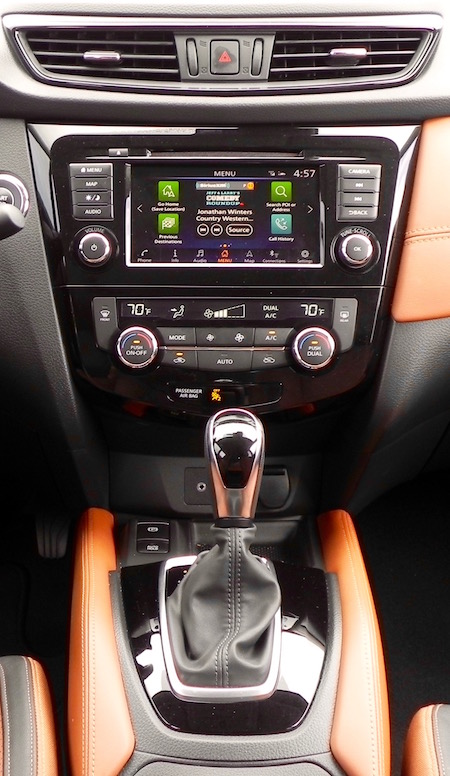
The top-of-the-line SR trim, upon which this review is based, adds such niceties as a leather-wrapped steering wheel, 17-inch aluminum alloy wheels (the S model comes with15-inch steel wheels), LED headlights and fog lights, special SR fabric for the seats, automatic climate control, 6-speaker audio system with satellite radio, NissanConnect with Apple CarPlay and Android Auto, and blind-spot warning.
A Convenience Package that adds heated front seats and Intelligent Control is offered on the SR class as well for $800.
Imagine that. Adaptable cruise control in an economy vehicle.
All Versa models come with the a 1.6-liter, 4-cylinder engine. A 5-speed manual transmission is standard on the S model and a ontinuously Variable Transmission dubbed Xtronic is an option on the S and standard on SV and SR models. All Versas are front-wheel drive.
That power train could use a little more oomph with horsepower at only 122 ponies and torque at 114 pound-feet. Still, that's an increase of 14 and 7 percent over the previous model, and fuel numbers are outstanding. With the CVT, the Versa is rated at 32 miles-per-gallon city, 40 highway, and 35 combined using regular unleaded. Numbers are slightly lower (27/35,30) with the manual.
The extra features aren’t the only differences for the 2020 Versa. At 177 inches and 68.5 inches, the 2020 model is 1.6 and 1.8 inches longer and wider, respectively, than its predecessor. It also sits a bit lower, and cargo space is a generous 15.0 cubic feet in the SR and 14.7 for the S and SV.
As mentioned earlier, these improvements did come at a cost. The base Versa S with the manual transmission has a starting MSRP of $15, 625 including the $895 destination and delivery fee, a jump of about $2,200 over the cost of the 2019 model.
The SR starts at $19,135, and a well-equipped model with options like the Convenience, Electronics, and Lighting packages, center armrest with storage (very minimal storage), and carpeted floor and trunk mats ran the total on my test car to $21,490.
The SV is in between at $18,355.
What I liked about the 2020 Nissan Versa SR: It comes with a lot of standard technological features that are easy to operate. The redesigned included use of some higher grade materials for the interior, which raises cabin ambiance. Fuel economy is among the best in its class.
What I didn’t like about the 2020 Nissan Versa SR: The console’s storage compartment is so small it is pretty much useless. Legroom in the back is a bit on the stingy side (31.0 inches).
Would I buy the 2020 Nissan Versa SR? I would give it more consideration now than in the past. It’s no longer the least expensive vehicle on the market today, relinquishing that distinction to hatchbacks Chevrolet Spark and the Mitsubishi Mirage. But the Versa comes with many features that usually aren’t found in the segment.
2019 NISSAN LEAF PLUS MODELS EASE ISSUE OF RANGE ANXIETY IN ELECTRIC VEHICLES
It doesn’t rank up in medical history with the discovery of penicillin or the development of the polio vaccine, but Nissan has found a remedy for a common complaint of owners of all-electric vehicles: range anxiety.
I remember when a few years ago I was sent a Nissan Leaf for week. Much of my time was spent calculating how far away it was that I wanted to go and if I would have enough charge to get back home later.
The Leaf at that time had a maximum range of about 90 miles, if I remember correctly, which is about the time my wife usually starts urging me to fill up the gas tank. On one trip I periodically would turn off the A/C to extend the range a couple of miles just to make sure I could get back home later.
But I had no such concern with the latest version of the Leaf I recently experienced.
The PLUS version of the Nissan Leaf that debuted for 2019 has an extended range that the company declares at 226 miles, though overnight charging indicated a range of 239 miles when in Normal mode and 251 when turned to Eco, at least based on my experience. That’s about 100 extra miles over the advertised 150-mile EPA range offered by the standard Leaf.
Range anxiety? What range anxiety?
The new high-capacity battery pack (62 kWh) and more powerful electric motor (62kW) in PLUS version Leafs also delivers more punch than the standard Leaf in the way of driving experience.
That battery-motor combination results in 214 horsepower, an increase of 45 percent over the base Leaf, and a whopping 250 pound-feet of torque, available at an instant and a big number for a compact hatchback.
You can feel the full effect of the extra torque when you shift from Eco to Normal mode. The jump in acceleration is very noticeable. Nissan estimates that the Leaf Plus gets from 50 to 75 mph about 13 percent quicker than the standard Leaf.
With a 100 kW Quick Charge Port and portable charge cable, charging time also is more efficient. I easily got it to full range overnight, which wasn’t always my experience with earlier electric vehicles.
The Leaf and the Leaf Plus each come in three trim levels — S, SV, and SL. This review is based on the SL PLUS that is at the top of the MSRP chart at $43,545 including the $995 destination and delivery charge.
That’s a pretty big jump over the standard Leaf S ($30,985) but within range of the S PLUS ($37,545) and SV PLUS ($39,505) and worth the extra cost.
The 2019 Leaf SL PLUS features such standard equipment Nissan’s ProPILOT assist with steering assist and adaptable cruise control, an around-view camera monitor, Intelligent Driver Alerts, automatic temperature control, leather-appointed seating surfaces, heated front seats, 8-way power driver’s seat with 2-way lumbar support, leather-wrapped steering wheel, 8-inch color display for the standard navigation system, Apple CarPlay and Android Auto, voice recognition, Bluetooth hands-free phone, 7-speaker Bose audio system, NissanConnect services, 17-inch wheels, LED headlights and fog lights, LED daytime running lights, and more.
Standard safety features include automatic emergency braking with pedestrian detection, Intelligent lane intervention, blind-spot warning, electronic brake distribution and assist, rear cross-traffic alert and more.
Extras like splash guards, premium paint, carpeted floor mats and cargo bay area, and a safety kit ran the total for my test Leaf SV PLUS to $44,315. But don’t forget, you also get tax credits that can lower that cost.
What I liked about the 2019 Nissan Leaf SL PLUS: This is a fun car to drive with significant torque and throttle response. This trim also is packed with many standard features with infotainment functions easy to operate. It’s a small thing, but the placement of the charging port at the very front is a nice touch. It gives you more flexibility when it comes to parking your car for charging.
What I didn’t like about the 2019 Nissan Leaf SL PLUS: The e-pedal feature that combines acceleration when pressing the “gas” pedal and braking when easing off is a feature I can live without. It can be useful when backing up and slow speeds, but it is kind of annoying when driving under normal conditions. Also, the gear shifter is a little too funky for me. It’s a round knob in the center of the console that you must tug to the left and then move up (for reverse) or down (for drive). The steering wheel is adjustable tilt only, not telescoping.
Would I buy the 2019 Nissan Leaf SL PLUS? This version of the Leaf is the first all-electric vehicle that I would actually consider buying.
2018 NISSAN MURANO OFFERS LUXURY AMBIANCE WITHOUT THE LUXURY PRICETAG
If you like the Nissan Rogue compact crossover (and many do as it is the company’s best seller) but want an SUV with a little more size, you can get it without even leaving the Japanese automaker’s showroom.
Though it is actually older than the Rogue by five years, the Murano looks kind of like a Rogue that has grown up.
At 192.8 inches long with a wheelbase of 111.2 inches, it has 8.3 and 4.8 inches over the Rogue, respectively, with an interior volume of 108.1 cubic feet to the Rogue’s 105.8.
The Murano also has a bigger engine under the hood with a 3.5-liter V6 with horsepower and torque figures of 260 and 240 respectively. The Rogue gets 170 hp and 175 lb.-ft. from its inline-4.
Both engines are mated to the company’s Xtronic continuously variable transmission that helps boost fuel economy to 20 miles-per-gallon city, 28 highway in both FWD and AWD Murano models compared to 26/33 for FWD Rogues, 25/32 for AWD Rogues.
But it’s not mere size that sets the Murano apart not only from the Rogue but a good many of its competitors as well. The Murano has the kind of refinement and high quality materials usually reserved for higher end models.
If it had an analog clock in the middle of the center stack, it would have the feel of a crossover from the company’s Infiniti luxury stable. (But at considerably less cost.)
Yes, it’s that nice.
 The Murano comes in four flavors starting with the base S model that starts at $31,000 with front-wheel drive. The SV opens at $34,300, the SL $38,700, and the Platinum at $42,430 with all-wheel drive adding $1,600 and destination and delivery taking on another $945.
As is often the case, my vehicle for the week was the top-of-the-line Platinum AWD edition that is chock full of so many standard features that options and packages are unnecessary, which makes up for at least some of the difference in price.
Standard exterior items included a panoramic moonroof, LED headlights, daytime running lights, and taillights, and silver roof rails. Standard safety features included automatic emergency braking, forward collision warning, blind-spot warning, around-view monitor with rear cross traffic alert, and numerous airbag systems that help earn it a 5-star overall safety rating from the federal government.
The list of standard and comfort features goes on, and on, and on, and on, and then on some more.
It’s almost easier to state isn’t included than what is. That would be Nissan’s ProPilot Assist program that helps keep your vehicle traveling in the flow of traffic as well as centered in the proper lane.
It is offered on the 2018 Rogue, but not the Murano.
But the refreshing for the 2019 Murano offers as an option (standard on Platinum models) the Nissan Safety Shield 360 technology that encompasses Automatic Emergency Braking with Pedestrian Detection, Blind Spot Warning, Rear Cross Traffic Alert, Lane Departure Warning, High Beam Assist and Rear Automatic Braking.
Frankly, I prefer lane departure “warning” over the slightly more aggressive lane departure “assist” any way in the ProPilot system, and I’m sure that I’m not alone in that.
ProPilot Assist is not the only advantage the Rogue holds over the Murano, however. Surprisingly, despite its slightly large size, the Murano’s storage capacity does not measure up to the Rogue’s.
Not that its cramped. Listed space at the rear of the Murano is 32.1 cubic feet to the Rogue’s 39.3. Behind the second row, the Rogue holds the advantage with 70 cubic feet to the Murano’s 67.
The Rogue also offers up to 43 inches of legroom upfront to the Murano’s 40.5, but the Murano holds the advantage in the second room, offering 38.7 inches to the Rogue’s 37.9.
In many ways, it’s a wash between the two vehicles. Both are good choices.
What I liked about the 2018 Nissan Murano Platinum: The cabin has the ambiance of a luxury model with lots of user-friendly technological features and lots of leather throughout. Designers were not afraid to include knobx for audio and climate control functions. Front seats are heated and ventilated, and rear seats are heated. Actual use matched the stated mileage figure of 21 mpg city.
What I didn’t like about the 2018 Nissan Murano Platinum: Response to vice commands was somewhat spotty. For some reason, I got a prompt that there was no subscription to satellite channels, but I was able to tune to SXM via the touchscreen. I don’t care for CVTs, but at least Nissan has eliminated the quirks of earlier tries. Fabricated shift points mimic manual gear selection, though with no paddle shifters the driver must reach over to the shifter on the console to take advantage of them.
Would I buy the 2018 Nissan Murano? Yes. Frankly, the Rogue fits my personal needs better at this time, but the classy Murano is a good choice. The driving experience isn’t all that thrilling, but its utility, fuel efficiency and classy interior makes up for that.
2018 NISSAN ROGUE CROSSOVER GETS PROPILOT TECHNOLOGY FOR SL MODELS
Nissan followed up its redesign of its popular Rogue crossover with several midyear enhancements 2017, and the updates keep coming for 2018 with added technology that represents a step — albeit a baby one — to self-driving capability.
The system, dubbed ProPilot, is available on the top trim Rogue SL model as part of a $790 Platinum Package suite of features that also includes 19-inch wheels (replacing standard 18-inchers) and an electronic parking brake.
To activate ProPilot assist technology, you simply push a button on the right side of the steering wheel spoke, then set the desired speed for the adaptive cruise control for the system to kick in.
In addition to keeping your Rogue at a proper distance from the vehicle in front of you, ProPilot also gently helps keep you in your proper lane via a camera-based system that works in a variety of conditions.
Frankly, the technology isn’t all that ground-breaking. I have driven many vehicles that give you a warning, either by an annoying buzzer or by gently vibrating the driver’s seat, to let you know if you are drifting out of your lane, and even been in some will give your steering wheel a nudge to keep you aligned properly.
Those, however, were a bit too aggressive, and even ProPilot takes a bit of getting used to.
Probably the most important thing to note about the ProPilot Assist is the the word "assist." It does not turn the Rogue (or the Leaf) into a self-driving car.
You still must perform basic functions, like keeping your hands on the steering wheel and keeping track of traffic around you. You can’t haul out your cell phone and start dialing calls (though you can I guess if you have synced your phone through the Bluetooth system).
Frankly, other than the adaptive cruise control, I’m not sure I would opt to include ProPilot among the options I would pay extra for, especially with adaptive cruise control and lane departure warning now standard on the SL, but it's not like the cost runs into four figures.
It’s kind of like off-road capability. Even if you don’t use it, it’s nice to know it’s there.
Other changes to the Rogue for 2018 are NissanConnect with Apple CarPlay and Android Auto and an additional USB port to all trim levels (S, SV, and SL) and standard Intelligent Cruise Control, Lane Departure Warning, Intelligent Lane Intervention and Automatic Emergency Braking with Pedestrian Detection for the SL grade.
S and SV trims also get some revised features and colors.
All three are powered by a 2.5-liter, 4-cylinder engine that is rated at 170 horsepower and 175 pound-feet of torque and mated with — dare we say it? — a continuously variable transmission.
Three driving modes are offered with Sport to enhance (a little) performance and Eco to save (a little) fuel along with standard or normal mode that earns mileage ratings of 25 miles-per-gallon city, 32 highway, and 27 combined.
Those are good figures and, according to the government, you will spend zero, yes zero, more dollars on fuel costs over a five-year period for the Rogue over other compact crossovers/SUVs.
But, thanks to that CVT, the fun driving quotient is very low.
The Rogue’s other qualities, however, weigh heavily in its favor.
The cabin design is very pleasing to the eye and the materials first-rate. Put an analog clock in the middle of the center stack and slap on Infiniti badging and it very easily could match up to offerings from its upscale siblings.
Price for the Rogue starts at $25,395 (including $975 destination and delivery) for front-wheel-drive S models. The SL with all-wheel drive starts at $33,385, and the SV trims sit in between. Hybrid models start at $27,615 for FWD and go up to $38,885 for SL models with AWD.
What I liked about the 2018 Nissan Rogue SL: The well-trimmed cabin is roomy and comfortable, and there's nice storage space (39.3 cubic feet) in the back with the elimination of the third row seating. The technology is plentiful and user friendly, especially for us non-geeks. And the exterior appearance doesn't take a backseat to any other vehicle.
What I didn't like about the 2018 Nissan Rogue SL: Nissan has refined the CVT to a fine point, but there is one thing it can't get away from. It's still a CVT. Whatever the engine might deliver in the way of performance, the CVT takes away from it.
Would I buy the 2018 Nissan Rogue SL? I basically have struck two vehicle types off my list of potential purchases: Plugin hybrids and vehicles with CVTs. Thankfully, this isn’t a plugin. If those features don't bother you, and you don't care about sporty performance in a crossover, then yes, the Rogue is a good choice. I might even overlook that it has a CVT next time I go vehicle shopping.
GETTING OUR KICKS OUT OF
A NEW CROSSOVER FROM NISSAN
Though the vehicle starting arrive in showrooms in May, Nissan last week took time to “introduce” its latest model, a subcompact crossover dubbed Kicks, at a preview for media.
It is the second such session company publicists have conducted for automotive journalists, the first being earlier in June in San Diego.
Frankly, I think they may be missing an opportunity here. Shouldn’t such briefings/drives be conducted somewhere along Route 66, like Chicago, St. Louis, Oklahoma City, Amarillo, or even Joplin, Missouri? (If you don’t get that reference, just Google “Kicks and Route 66.”)
Ah, but as charming as it can be, nothing along U.S. Route 66 matches the ambiance of a drive to Key Largo in the Florida Keys on a sunny June morning, even if you do have to negotiate Miami traffic to start. Fortunately, school is out, tempering the rush hour traffic a bit.
It started at the 1 Hotel in Miami Beach, where our hosts from Nissan had previewed the first new model to the Nipponese automaker’s fleet in eight years. The Kicks joins the Rogue, Rogue Sport, Murano, Pathfinder, and Armada as the sixth crossover/SUV in Nissan’s lineup.
Nissan is looking to take advantage of what looks to be a substantial growth in the CUVsegment, which includes such competitors as the Kia Soul, Hyundai Kona, and Ford EcoSport. Sales are expected to increase from 119,700 in 2017 to over 306,000 by fiscal year 2022, a growth rate of 156 percent.
The Kicks is targeted for a mostly millennial audience of singles and couples with a median income between $45,000-$65,000 with no children who, Nissan marketing folks say, are “smart spenders, tech-dependent, image conscious, and socially responsible.”
Three things to know about the Kicks, according to James Marschner of Nissan Marketing:
1. The Kicks offers expressive style and smart design. The 2018 model was a joint design project from Nissan’s Design America facility n San Diego and new Nissan Design America — Rio studios. The concept was shown four years ago at the Sao Paulo auto show, and the end result reflects the spirit of Brazil’s famous Carnival. It comes in seven exterior colors and five two-tone schemes utilizing the “floating roof” theme.
2. The Kicks is chock full of unexpected technology. Kicks is the only vehicle in its segment to offer standard Automatic Emergency Braking at a price that starts below $18,000. Also standard are a 7-inch touchscreen display, three USB ports, and Bluetooth Streaming Audio with available Apple CarPlay and Android Auto.
Even the base S model has remote keyless entry and push-button start and cruise control. An SR Premium Package features the class exclusive Bose Personal Plus Audio System.
3. The Kicks offers “incredible” value. The S model starts at just under $18,000 before the $975 destination and handling fee is added. The SV is listed at $19,690, the SR $20,290, and the SR w/Premium Package $21,290.
Available options include driving assist features such as blind spot warning and rear cross traffic alert (SV) and intelligent around-view monitor (SR).
Unfortunately, my driving partner and I did not get to experience the new Bose Personal Sound system that Marschner and Steve Parrett, product communications manager, spoke so highly of, but I have kind of a tin ear anyway. Sound upgrades are kind of wasted on someone who spends a lot of time on AM talk radio, but I understand — and appreciate — those who feel otherwise.
The route for the 68-mile trip from the Miami Beach hotel to lunch at the Playa Largo Resort on Key Largo took us down Collins Avenue to Fifth Street, over to Interstate 95 and U.S. 1.
The planner also showed a little creativity by taking us through neighborhoods and eventually to Florida’s Turnpike, which takes you back to U.S. 1 in Florida City before the final 18-mile stretch on the mainland into Key Largo.
The Playa Largo Resort is situated on the Bay Side of the Keys, and it was tempting to extend the occasion as long as possible to take in the water views. This was indeed a post-card kind of afternoon that exudes the Margaritaville spirit of Jimmy Buffett, and the musical tones of the duo Gaby Gabriel and Lorena added to the “let’s-kick-back” atmosphere.
The Keys can do that to you — at least to me — at times.
But, alas, it soon was time to return to real life on the mainland.
The return trip took a different route and was longer by a couple miles, which gave me a bit more time behind the wheel. It’s a very comfortable vehicle to ride or drive, but I found myself wishing it had a bit more oomph to it.
The 1.6-liter 4-cylinder engine is rated at only 125 horsepower and 115 pound-feet of torque, numbers that Nissan folks acknowledge are on the low side, but say are compensated for by the light curb weight (2,672 pounds).
The real power killer to me is that a CVT (continuously variable transmission) is the only tranny offered. Though Nissan has improved it over the years, it still lacks the punch and driving fun a 6-speed manual would offer.
But if they want me to take it back down to the Keys, or even Route 66 for that matter, I’d be glad to oblige!
NEW MIDNIGHT EDITION PACKAGE GIVES NISSAN TITAN A BOLDER LOOK FOR 2018
After taking a year off, Nissan brought the Titan back to the market for 2017, moving the full-size pickup into its second generation with a new half-ton model that earned it honors that included 2017 Pickup Truck of the Year from Truck Trend magazine and three awards — Full-size Truck of Texas, Commercial Vehicle of Texas, and Best Value — in the annual Texas Truck Rodeo conducted by the Texas Auto Writers Association.
For 2018, the Titan takes on a more aggressive, rugged appearance with a new optional Midnight Edition package that includes a body color front grille with dark insert, dark headlamps, black fog lamp finisher, black exterior badging, black mirrors, black door handles, 20-inch black wheels, body color front and rear bumpers, black step rails, charcoal interior trim and "Midnight Edition" exterior badge.
It kind of looks like a truck Batman might take if he had to make a Home Depot or Lowe’s run.
Pickups in general seem to be all about choices, and such is the case with the Titan.
Five trim levels — S, SV, PRO-4X, SL, and Platinum Reserve — are offered in either 4X2 or 4X4 configurations with one exception. The PRO-4X model is available as a 4X4 only.
Three cab styles — Single Cab, Crew Cab and a new King Cab — are offered as well as three bed lengths. Single Cab models get an 8-foot bed, Crew Cabs a 5.5-foot bed, and King Cabs a 6.5-foot bed.
And then, of course,there are all kinds of options, including the new Midnight Edition, to allow you to pretty much customize your truck to your own personal styling preferences.
Powering the Titan is a 5.6-liter V8 engine that boasts 390 horsepower and 394 pound-feet of torque, giving it slightly more punch than the 317/385 more than the previous generation offered.
It is mated to a 7-speed automatic transmission with 4X4 models getting a shift-on-the-fly system that allows you to go to automatic, 4-Hi or 4-Lo mode with the turn of a knob on the dash.
Maximum towing capacity and payload are 9,740 and 1,940 pounds, respectively, for 4X2 models, 9,560/1.950 for 4X4s.
My test drive for the week was an SL 4X4 crew cab model equipped with the Midnight Edition package with a list of features that, if purchased separately, would have added $1,810 to the base MSRP of $50,360. That’s almost $600 more than the $1,250 they cost as a package.
With other options like rear bumper step, Titan Box, electronic tailgate lock, and special floor mats plus the $1,295 destination charge, the final tab came to $54,775.
That is near the top of the price range for the Titan lineup as well as for the segment as a whole. The Titan S Single Cab 4X2 starts at just over $30,000, and even the S Crew Cab carries a price tag of well under $36,000.
The Crew Cab’s interior is very functional and roomy with those in the second row getting a generous 38.5 inches of legroom.
The SV has leather-appointed, heated captain’s chairs with an 8-way power adjustable driver’s seat as standard, and the 60-40 split leather-appointed rear seats flip up for under-the-seat storage and a fold-flat floor.
Standard features include Bluetooth hands-free phone system, front-and-rear sonar systems, a rearview monitor, dual-zone automatic climate control, NissanConnet with Navigation and voice recognition, and a 12-speaker Rockford Fosgate premium audio system that includes SiriusXM satellite radio.
All that makes the Titan not only a workhorse but a vehicle suitable for family transportation, too. Its ride is firm but comfortable enough and quiet as well, which keeps certain riding companions happy.
So why is the Titan lagging so far behind in sales in a segment dominated by Ford’s F-Series, Chevy’s Silverado (though Chevy numbers for May are not available because of GM’s quarterly reports), and the Ram?
Even Toyota’s Tundra is outselling the Titan for the year through May with 45,837 sold in the U.S. through May to the Titan’s 19,173. And the Titan’s year-to-date numbers through May were down 5.4 percent from last year.
Brand loyalty no doubt has something to do with it. The domestic trio has long dominated the market, and though the Titan was developed with input from company teams located in Tennessee, California, Michigan, Arizona, and Mississippi, and is assembled in Canton, Mississippi, with the V8 coming from Decherd, Tennessee, its roots are still in the Far East.
Also, however, as nice as the Titan is — and U.S. News & World Report analysts rate it ahead of Toyota’s Tundra — it needs something to separate it from its competitors, to make potential buyers take notice.
Exactly what that would be I must confess I don’t know. Such things like that are well above my pay grade.
What I liked about the 2018 Nissan Titan: The cabin is comfortable and nice and roomy. Technology is user-friendly (it took mere seconds to link my cell phone). The standard running boards make getting in and out much easier, though I might like to see a grab handle above the front doors in addition to the one on the A-pillar.
What I didn’t like about the 2018 Nissan Titan: The standard navigation screen is on the small side and not easy to catch at a glance, but adjustments are easy enough.
Would I buy the 2018 Nissan Titan? I’m not a pickup guy, so no, I wouldn’t buy it. But it is a very utilitarian truck with a long list of standard features. Optional “Midnight Edition” features give it an especially aggressive look. Overall, it’s worth a look if you are shopping in the segment.