Showing posts with label Chrysler. Show all posts

Monday, July 22, 2019

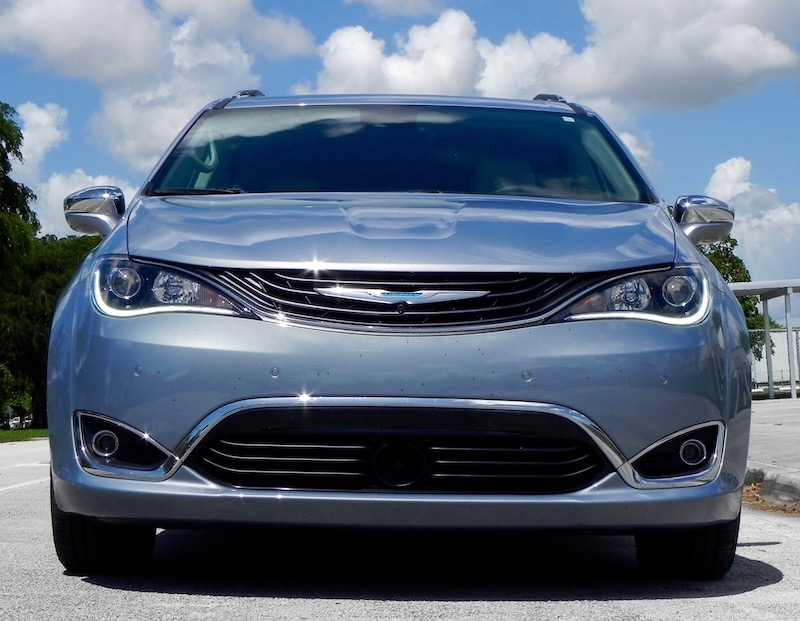
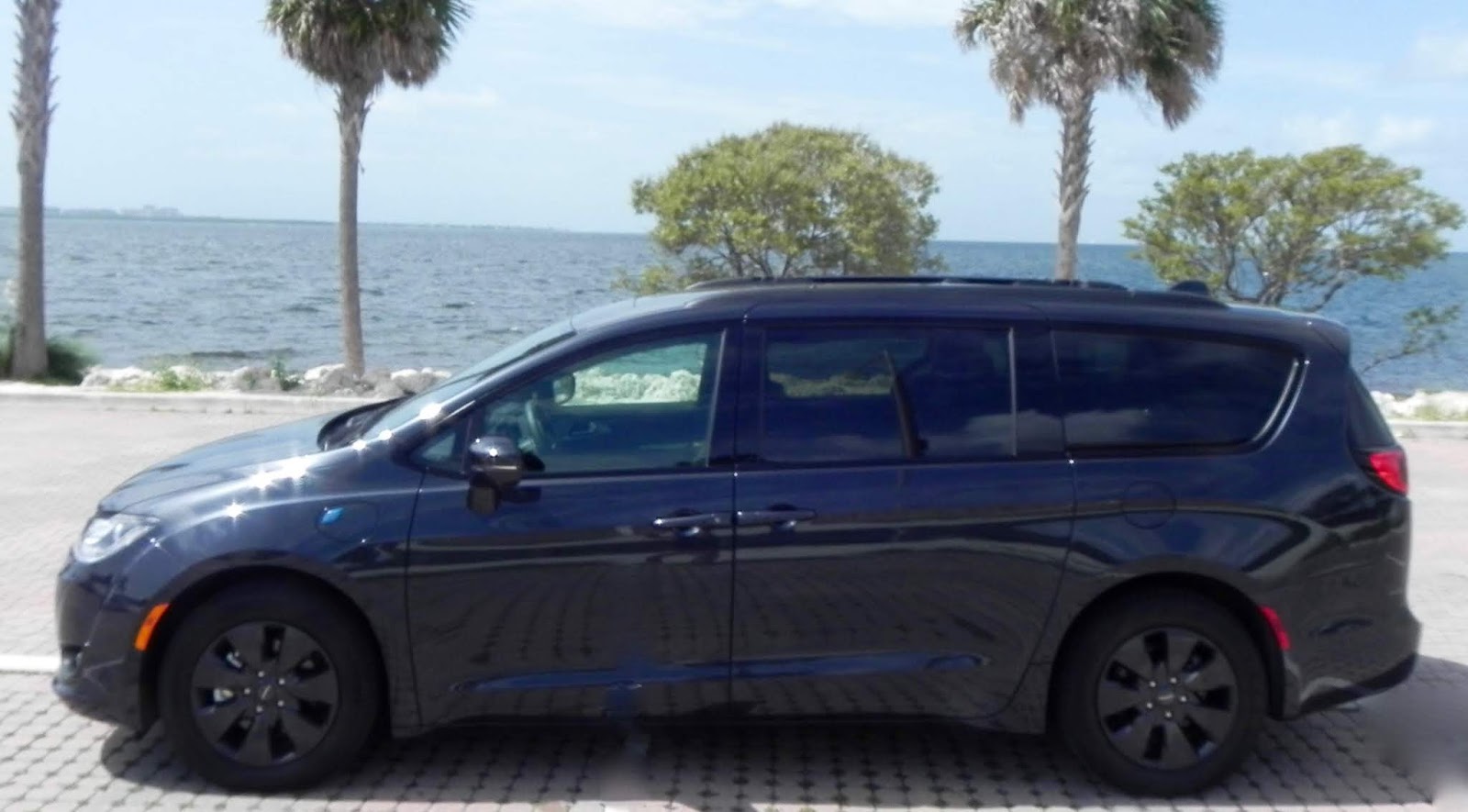
CHRYSLER PACIFICA REMAINS ONLY MINIVAN WITH HYBRID DRIVETRAIN FOR 2019


Though there were other stabs at it in the past, including one as far back as 1935, Chrysler generally is credited with creating the family minivan that we know today when it introduced the Dodge Caravan and Plymouth Voyager in 1984.


Thus it is fitting that Chrysler is the first — and so far only — manufacturer to offer a gas-electric hybrid minivan on the market with the Pacifica Hybrid.

The 2019 model actually marks the third year for the plug-in model that can go up  to 30 miles on a full electric charge and offer a combined range of 530 miles under V6 power.


Frankly, the surprising thing about this is that nobody has come out with such a vehicle before. A minivan that offers mileage figures of 82 MPGe and 30 mpg combined electric-gasoline while still delivering decent acceleration with its 287 horsepower and 262 pound-feet of torque would seem to be a win-win situation with growing families.


No doubt, others will soon catch up.

With the exception of the powertrain and the lack of  Stow N’ Go seating, the Pacifica Hybrid and the Pacific share mostly the same characteristics. The Pacifica Hybrid sacrifices the storage space under the second row seats to house the battery pack, and that is about it.


Getting in an out of the Pacifica Hybrid is a snap (no need for a running board), it rides comfortably, and it offers good storage space. Cargo volume behind the third row (which, by the way, with its 36.5 inches of legroom is not as cramped as some critics have said), is a generous 32.3 cubic feet. It’s 87.5 cubic feet behind the second-row after folding the third-row seats with the push of a button.

It comes in three trims.

The Touring Plus carries a base MSRP of $41,490, the Touring L is listed at $43,690, and the top-of-the-line Limited carries a tab of $47,040, which is a big step up from the gasoline-powered Pacific that starts at under $30,000.


This review is based on the 2019 Pacifica Hybrid Limited. Adding in optional equipment ran the total price tag to $50,800.

Say this: Even before adding in extras, the Pacific Hybrid is well-equipped.

Standard features on the Limited include Chrysler’s UConnect 4C infotainment system with navigation and an 8.4-inch screen, Bluetooth hands-free communication, 1-year of SiriusXM radio with Traffic Plus, Android Auto and Apple CarPlay, 4G LTE Wi-Fi hot spot, heated steering wheel, heated and ventilated front seats, remote start, blind-spot and cross-traffic alert, rear-park assist, and remote start.


A new S Assistance Package ($595) that adds among other things Nappa leather bucket seats and special black trim and an Advanced Safety Tec Group ($995) that includes Full-Speed Collision Warning-Plus, a 360-surround view camera system, lane-departure warning and other advanced safety features are well-worth the extra cost.

A tri-panel, panoramic sunroof, which I personally can do without, is an extra $1,795.


All told the total MSRP for my test vehicle was $50,800. (If you do the math, you’ll see eliminating the sunroof will keep you under $50,000.

That doesn’t take into account any of the tax credits you may get from the federal or state government, which can make the Pacific Hybrid a bit more competitive price-wise. As it is, it is pretty much at the top of the segment.

What I liked about the 2019 Chrysler Pacifica Hybrid Limited: Throttle response is quite robust for a minivan, and fuel efficiency is at the top of its class. Rear doors open on both sides, which may not be new to the segment but are still appreciated. They also power open with either a punch on the appropriate spot on the key fob or a gentle tug on the door handle. They close the same way. Tech features are very user-friendly.

What I didn’t like about the 2019 Chrysler Pacifica Hybrid Limited: I don’t get the allure of plugin hybrids. Yes, you can get some miles on electric power only, but unless you have a special charging outlet, getting the battery up to full charge is a drawn-out process. That said, the hybrid operation still makes sense here.

Would I buy the 2019 Chrysler Pacifica Hybrid Limited? Yes. It’s an ideal vehicle for family transportation, especially families with three or more children. Unfortunately, it’s about 35 years too late for me!


Sunday, April 15, 2018

200 IS GONE, BUT CHRYSLER 300 CONTINUES TO THRIVE IN FULL-SIZE SEDAN SEGMENT


Chrysler may have pulled the plug on its midsize 200 sedan after the 2017 production run because of lagging sales, but the company’s full-size 300 sedan remains a viable competitor in its class.

Though sales of the 300 were off just under 14 percent for the first quarter of 2018 compared to a year earlier, March numbers showed a significant jump of 25 percent over the same month in 2017, making it only one of 10 in its segment to show an increase for the month.

With 6,223 sold, the 300 trailed only the Dodge Charger (8,504) and Chevrolet Impala (7,581) for the month.

Maybe it’s that history is on its side.

Use of “300” in Chrysler automotive nomenclature dates back to the 1950s and the company’s “letter series,” but the current rendition dates back just over a decade when automotive media bestowed North American Car of the Year honors on the 2005 Chrysler 300 that Ralph Gilles designed.

Now Head of Design for the company making him — according to the company releases — responsible for “shaping and directing design across the Company's entire brand portfolio,” Gilles was dubbed the “King of Bling” for the aggressive approach he took with the 300’s design.

Some corners considered its styling polarizing. You either loved it or hated it, but one thing was certain: You couldn’t ignore it.

“The 300 was one of Ralph’s great designs because it has almost an Africa-American, urban presence to it,” comedian and automotive enthusiast/collector Jay Leno says in a Netflix series, Abstract: The Art of Design, that delves into the art and science of design. “It’s got street cred. It looks cool.”


It also may have been a life saver for Chrysler or at least instrumental in helping navigate the company through some dark financial times.

In 2011, Chrysler modified the 300 but just a bit, cutting back on what a New York Times reviewer called the gangsta-chic styling elements with a more refined look with rounder lines and slightly bigger windows.

But come to this year, the 13th since its introduction, there is no mistaking the 2018 Chrysler 300 for any of its competitors. If the styling is a bit less polarizing, it still remains very much distinctive.

The 300 lineup for 2018 gets a new Touring model as the base, but I spent my week in the 300S, the sportier of the group that falls at the midpoint of the trim line between the Touring and Touring L models and the Limited and 300C.

It had the optional 5.8-liter HEMI V8 under the hood in place of the standard V6, which upped horsepower and torque to 363 hp and 395 pound-feet from the smaller engine’s 260/264, respectively. I’d have to say if you want to get the full benefits of the sportier performance the 300S offers over its stablemates, the V8 is the way to go, but it does cost $3,000 more.


The engine is mated with an 8-speed automatic transmission that features paddle shifters and sport mode to further enliven responses. With rear-wheel drive, fuel economy for the V8 is rated at 16 miles-per-gallon city, 25 highway using recommended mid-grade (89 octane) fuel. Figures are 19/30 for the V6 with RWD, 18/27 with AWD with regular 87 octane recommended.

Apparently, nobody at the company put a stop watch on the 300S to get a zero-to-60 time, but previous models had it in the six-second range and the website zeroto6-times.com caught the 300C SRT8 at 4.3 seconds a few years ago. Sad to say, the SRT8 model is no longer offered.


Considering you’re going to be spending most of your time inside, it’s worth noting that the interior of the 300S has kept up with the times. The seats are comfortable, the ride is quiet and fairly smooth, and the entire cabin has been opened up with the slightly larger windows from those of the first generation improving vision overall. It’s still slightly restricted out the back, though.

Features such as Keyless Go, remote start, ParkView rear backup camera, UConnect 4C with 8.4-inch display, Apple CarPlay and Android Auto, a leather-wrapped steering wheel, and integrate voice command with Bluetooth are included in the $35,795 base MSRP.


Adding optional features such as the 300S Premium Group (navigation, dual panel, panoramic sunroof, etc.), 300S Premium Group 2 (HID headlights, power tilt-and-telescoping steering wheel, memory for driver’s seat, radio, and mirrors, parking assist system, blind-spot warning, heated steering wheel and heated second-row seats, and ventilated front seats, among other features), Beats Premium sound system, the HEMI V8, and safety features like lane departure warning and adaptive cruise control can run the total to over $48,000 including the $1,095 destination and delivery charge.

Price range for the 300 lineup runs from under $30,000 to just under $41,000 before extras are added in.

What I liked about the 2018 Chrysler 300S: Like the car itself, the color grew on me. Chrysler called it “ceramic grey clear coat” but it looked a lot like “battleship gray” to me. It took me back to my Navy days and I felt like an admiral when I got in, though if I were an admiral, I probably would be in the back seat being chauffeured and not behind the wheel. I also find the UConnect system being one of the most user-friendly around, if not the most friendly, and the 8.4-inch screen is easy on the eyes. I also liked the V8’s power and throttle response.

What I didn’t like about the 2018 Chrysler 300S: The trunk is big enough at 16.3 cubic feet (typical for the class), but the rear wheel wells may impact how you can use that space.

Would I buy the 2018 Chrysler 300S? Yes, and I would go for the S over the other models if you want more in the way of driving fun.


Thursday, August 17, 2017

CHRYSLER PACIFICA HYBRID HAS A LOT MORE GOING FOR IT THAN FUEL-SAVING VIRTUES


Having resurrected the Pacifica nameplate in early 2017 with the introduction of a full-fledged minivan replacing the combination wagon/SUV that went out of production after the 2007 model, Chrysler has unveiled a hybrid version of the same for the more fuel-conscious among you.

Both the standard Pacifica and the Pacifica Hybrid are labeled as 2017 models, though the former has been around for well over a year and the latter just hit showrooms this past spring.


They are essentially the same vehicle with the obvious difference in powertrains, plus the popular Stow-’n-Go seats that hide the second row captain's chairs under the floor for more storage are not available on the Hybrid. That's where they put the battery for the electric motor.

Well, there is also a difference in price.

The Pacifica Hybrid Premium (the base trim) carries an MSRP of $43,090 including the $1,095 destination and delivery charge with a $7,500 federal tax credit bringing the effective price down to well under $36,000. (Chrysler says it’s under $35,000 but that doesn’t figure in the destination charge.)


The top trim level for the Hybrid, the Platinum edition, checks in at $46,090, which is competitive with the Pacifica Limited with its 3.6-liter V6 (base MSRP of $42,990) when that tax credit is applied. Various options can make a difference when doing comparison shopping, of course.

The Pacifica Hybrid Platinum I had for a week carried a total MSRP of $47,885 with the Customer Preferred Option Package, which included such features as adaptive cruise control, blind spot and cross path warning, and the UConnect Theater Package, was counted in.


The Pacifica Hybrid is a plug-in model that can go up to an estimated 33 miles on electric power only, which may be enough for running the kids to school or making a grocery trip depending upon where you live and shop. Past that, power comes from the V6.

With an electrically variable transmission with dual motor EV drive capability, the Pacifica Hybrid earns a fuel economy rating of 84 miles-per-gallon equivalent (MPGe), which the company says leads the minivan segment. Keeping that battery charged for the most efficient operating takes up to 14 hours on standard housing 110-volt storage. Get the level 2 charger (240 volts) and that time is cut to just two hours.


That works for routine daily tasks, and for long family trips where public charging stations may not be available, the gasoline-only operation is rated at 32 miles-per-gallon overall.

With the exception of the second-row, Stow-’n-Go seating, the Pacifica Hybrid comes with all the features you are looking for in a minivan, No. 1 being lots of space for seven passengers and all their stuff.


There are all kind of nooks and crannies for storing items throughout the spacious, nicely appointed cabin. There is 32.3 cubic feet of storage area behind the third row, and the Stow-’n-Go system that is missing on the second row still works for the third with the back seats folding neatly into the floor to boost cargo capacity to 87.5 cubic feet.

The Platinum edition in particular comes with a plethora of standard features that make the difference in price worthwhile. They include a hands-free power liftgate, power sliding doors on both sides, keyless operation with push-button start, capless fuel filler (push a button on the driver’s door and a signal in the instrument panel lets you know when it is ready for fueling), three-zone A/C, UConnect 8.4 NAV (which is one of the more intuitive systems to operate), automatic headlamps with LED daytime running lights, fog lights, LED tail lamps, leather seat surfaces, and an 8-way power driver’s seat with 4-way lumbar lumbar support. 

That Customer Referred Package, a $1,795 option, is well worth it. In addition to the features mentioned earlier, it also includes a 360-degree surround view camera and rear-seat entertainment and park assist systems.

So why go for the Hybrid over the standard Pacifica?


The bottom line to me comes down to how many miles you drive in a typical year and if the savings you get from the Hybrid are worth the difference in upfront costs. I’ve seen people crow about the virtues of their hybrid car and then just let it sit in their driveway most of the day/week.

If you do drive the normal amount and keep that battery charged up, you’ll get the full benefits of the Hybrid, and there also may be state and local tax breaks in addition to the federal tax credit that will make a difference in cost as well.


I’ll let you do the math for your potential savings. It gives me a headache.

What I liked about the 2017 Chrysler Pacifica Hybrid: Lots of high quality materials are found throughout the interior. The ride (with an exception I’ll note in a minute) is very quiet and comfortable. It cruises nicely on the highway, and power (estimated 260 horsepower) makes for a nice drive around town.


What I didn’t like about the 2017 Chrysler Pacifica Hybrid: The whine from the electric motors — which is typical on many hybrids — as you slow to a stop grinds on the nerves. Also, I don’t like fooling around with the extension cords that come with plug-in hybrids. 

Would I buy the 2017 Chrysler Pacifica Hybrid? Well, no, I wouldn’t at this stage of my life. I’ve been an empty nester for quite some time. But when it comes to family transportation, a minivan is hard to beat, and the Pacifica Hybrid has to be near the top of your list. If price is the determining factor, check out the gasoline-powered Pacifica. You can get the Stow-’n-Go seats with the vacuum cleaner with it!


Thursday, January 12, 2017


CHRYSLER TAKES BIG STEP UP IN BRINGING BACK PACIFICA FOR 2017


In case you missed it, the North American International Auto Show, more commonly called the Detroit auto show, this week announced its selections for vehicles of the year.

The new Chevy Bolt EV received Car of the Year honors. Not surprising, considering the media's infatuation with electric vehicles.

Truck of the Year went to the Honda Ridgeline. Last September some visiting journalists scoffed when our media group, the Southern Automotive Media Association (SAMA), chose the Ridgeline as the Truck of the Show at the Miami International Auto Show. Wonder what they think now? Some people apparently can’t get over a Ford or Chevy not winning. Autoblog called the selection a “surprise winner.”

And Utility Vehicle of the Year, a new category for Detroit, went to the Chrysler Pacifica. 

Frankly, I kind of had my doubts about that one, not because the Pacifica isn’t a fine vehicle but more because a minivan isn’t what comes to my mind when I hear the term “utility vehicle.” I think more of SUVs or Crossovers. Maybe I need to think out of the box more.

The Pacifica fits as a “utility vehicle” just fine, though. It certainly is utile. It beat out a pair of SUVs, the Jaguar F-Pace and Mazda CX-9, which presumably would have been put in Truck of the Year categories in the past since Volvo’s XC90 SUV won NAIAS Truck of the Year honors in 2016.


But unlike in its previous incarnation, the 2017 Pacifica is most definitely a minivan. In its first go-around from 2004-07, the Pacifica had a bit of the appearance of one of the new crossovers that were beginning to come into vogue around that time.

One of the questions my boss asked me after I had driven it on a trip from South Florida to St. Louis was whether I thought it handled like a minivan or an SUV.

“A minivan,” I replied.


That Pacifica may have resembled an SUV/Crossover, but that’s not the case with the new one. With its power sliding rear doors (on both sides) and open floor instead of a full center console between the front seats, there’s no doubt about the Pacifica’s character now. It’s definitely a minivan. In fact, the Pacifica effectively replaces the successful and trend-setting Town & Country minivan in the Chrysler lineup.


When it comes to a vehicle for family transportation, especially families of two-plus children, the minivan is hard to beat. Chrysler has provided the Pacifica with a generous room for storage behind the third row, 32.3 cubic feet, and those third-row seats fold at the push of a button to boost that capacity to 87.5 cubic feet. It comfortably seats seven in what Chrysler touts as the largest interior in the segment with passenger volume of 165 cubic feet.


It comes in five trims with even the base or LX trim coming with features like Stow-’N-Go seating, an 8-way power adjust driver’s seat, rearview camera, Bluetooth, a voice-command system, and active noise cancellation for a quieter ride as standard.

My top-of-the-line Limited model also had as standard leather seating, hands-free rear liftgate and sliding side doors, a panoramic sunroof, blind spot and cross traffic detection, rear park assist, keyless and remote start, UConnect infotainment system with an 8.4-inch screen for navigation, HID headlights, and 18-inch wheels.

All that was included in the $42,495 MSRP. Options, including a safety package that included a 360-degree surround view camera and adaptive cruise control and a theater package that featured seat-back screens for videos, plus the $995 destination and delivery charge ran the total price tag to $48,475. That’s almost $20,000 over the MSRP for the base LX model.

All trims come with a 3.6-liter Pentastar V6 engine that puts out 287 horsepower at 6400 rpm and 262 pound-feet of torque at 4000 rpm. Mated with a 9-speed automatic transmission, fuel economy is rated at 18 miles-per-gallon city, 28 highway, and 22 combined, about average for the segment.


There is also a hybrid version that can be recharged via a plug-in that Chrysler says will go up to 30 miles on electric power while offering an 80 MPGe rating overall.

Throttle response is pretty good for the class, and despite its capacity for hauling passengers and cargo, it doesn’t have the feel of being an overly large vehicle like you get with some full-size SUVs. There’s even a certain amount of agility about it, though I wouldn’t approach it like a performance car when in traffic. Or not in traffic, for that matter.


The interior has an upscale feel about it. Despite a wealth of technological features, the dash has an uncluttered look even with a few knobs to duplicate some of the basic functions (radio, climate control) that can be operated off the touchscreen. Response to voice commands was quick as well with no unnecessary delay from a repeat of the command from the system.

About the only negative I could find probably was peculiar to this particular vehicle, not common throughout the production run. The front passenger door must have been sprung by some previous user and the bottom half would not line up flush with the sliding rear door when closed. That’s not likely to be the case on other Pacificas.

What I liked about the 2017 Chrysler Pacifica: Operating the many infotainment features on the UConnect system is a breeze, especially when compared to how many makers of more expensive cars complicate them up. No need to delve into the operating manual to learn how to change a radio station or adjust the map for the navigation scale! And you can lower the windows for the second-row seats.

What I didn’t like about the 2017 Chrysler Pacifica: There’s little not to like about it, unless you just don’t like minivans.

Would I buy the 2017 Chrysler Pacifica: Not at this stage of my life, no. But if I were younger (OK, much younger) and faced traveling with a bevy of energy-packed kids, I definitely would give it a look.