Monday, November 30, 2020

2020 GMC SIERRA 1500

LUXURY COMES TO PICKUP TRUCKS

WITH 2020 GMC SIERRA 1500 DENALI


I don’t know when pickup trucks started coming with price tags that used to be found only on top-end luxury sedans, but there is no question you can spend just as much on a workhorse vehicle these days as you can on a thoroughbred.

Not saying you have to, of course, because manufacturers tend to start with lower-end pricing, but they certainly can work their way up rather quickly.

All you have to do is start with their top-of-the-line models and start adding options and available packages and pretty soon you have a truck in the $60,000 to $70,000 range or even more.


A neighbor of mine who drives a very nice pickup for work can only shake his head and wryly smile when he looks at the bottom line pricing for trucks like the Denali edition of the 2020 GMC Sierra 1500 that recently assumed temporary residence in my driveway.

Starting MSRP for the Denali is $58,200, which is a pretty big hunk of change in itself and soon balloons out to $71,850 when options like the CarbonPro Edition (carbon fiber box, HD surround vision, adaptive cruise control, lane-departure warning, and much, much more), a 6.2-liter V8 engine (in place of the standard 5.3-liter and available exclusivcely on 4-wheel drive Denalis ), and a special paint job (white frost tricoat) are added on.


The 6.2L V8 offers 420 horsepower, max torque of 460 pound-feet, and fuel economy ratings of 15 miles-per-gallon city, 20 highway, and 17 combined. The torque number equals that of the diesel engine. It is paired with a 10-speed automatic transmission.

Of course, you don’t have to go spend $70,000. Starting MSRP for the base 2020 Sierra 1500 is $31,195, but even that might stretch what used to be a typical budget for a pickup.


The Sierra 1500 is offered in six trims (Sierra, SLE, , SLT, AT4, and Denali) and is a slightly upgraded version the more popular Chevrolet Silverado, which, by the way, carries an MSRP that starts at just a tad under $30,000.

They both have the same engine options, which includes the previously mentioned V8s (5.3L and 6.2L) along
with a turbocharged 4-cylinder and V6 and a 3.0L turbo diesel, and they both offer configurations that include Regular Cab, Double Cab and Crew Cab body styles.
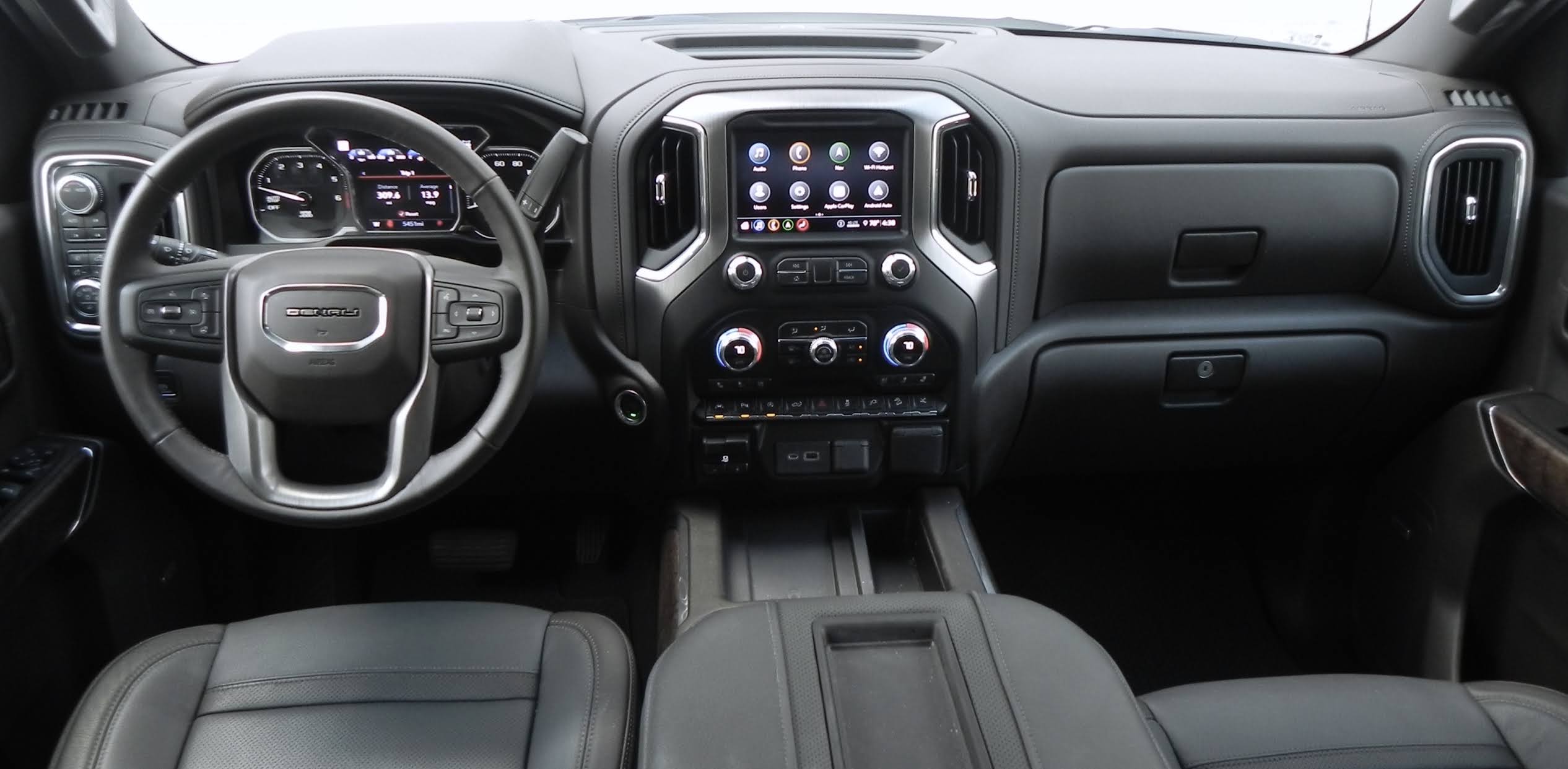

The Denali comes exclusively with the Crew Cab, which provided lots of room and creature comforts that created a more SUV-like ambiance.

To separate the Sierra from its sibling Silverado, GMC trims it with some upgraded interior materials and some other features, like a six-function tailgate that can serve as a work bench or provide easier access for loading stuff, are available only on the Sierra. That MultiPro tailgate is standard on the Denali, but the carbon-fiber bed is available in optional CarbonPro package.

Other standard features on the Sierra Denali include a Driver Alert Package (front and rear park assist, lane-change alert with blind-spot alert, and rear cross-traffic alert), a 2-speed transfer case for 4WD models, adaptive ride control, a trailering package, premium infotainment system with an 8-inch touchdown and navigation, Apple CarPlay and Android Auto, Bluetooth communications, Bose Premium Sound system, dual-zone climate control, 10-way power front bucket seats, a huge front storage bin, ventilated front seats, heated and leather-wrapped steering wheel, OnStar services, keyless open and start, wireless and USB charging, power outlet in the bed, 12 cargo tie-downs, LED headlamps and fog lamps, and dual exhaust with chrome tips.

One pretty neat feature is an available camera-based rear-view mirror that provides high-def images. It is included in the CarbonPro Edition suite of features.

What I liked about the 2020 GMC Sierra 1500 Denali: The rear camera mirror is really cool. You don’t have to worry about adjusting the mirror and the image is very sharp.The infotainment system controls are very user friendly as well. Hooray!

What I didn’t like about the 2020 GMC Sierra 1500 Denali: Not sure the extra cost over the Chevy Silverado is worth it when the main difference between the two seems to be the multi-purpose tailgate on the Sierra, but the tailgate is kind of neat. A full-size pickup (231.7 inches long with a 5-foot-8 box, 241.2 with the longer 6-6 box, and 81.2 inches wide), the Sierra is a bear to maneuver in mall parking lots.

Would I buy the 2020 GMC Sierra 1500 Denali? As I have mentioned many times, I don’t have a need for a full-size pickup, but if I did, I would be shopping this one. It is really difficult to separate the top models in the segment. It would come down to what the dealer offered.


Sunday, November 8, 2020


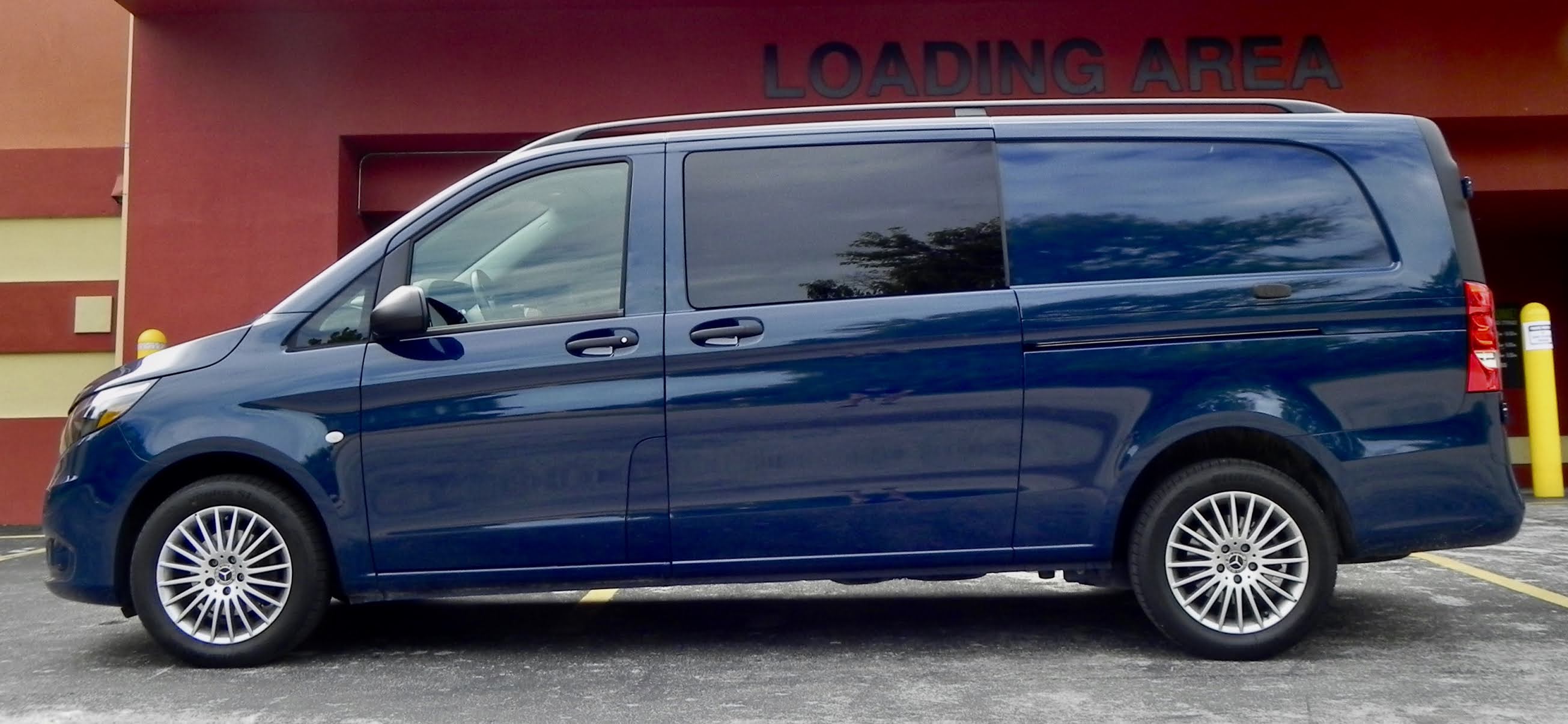
2020 MERCEDES-BENZ METRIS CARGO VAN ALL ABOUT WORK, WORK, WORK


After spending a week in the 2020 Mercedes-Benz Metris van, I have a new respect for drivers of commercial vehicles with enclosed rear cargo areas, and I intend to give them plenty of room when driving.

How they manage with just side mirrors letting them know what is going on behind them is beyond me. I never did get comfortable in the Metris without the typical interior mirror mounted above the windshield.

You might be surprised to learn just how much information you can gather from that little reflecting device that Ray Harroun mounted above his dash to allay fears from his fellw competitors in the 1911 Indianapolis 500 that he would be driving blind without a mechanic at his side as the other 39 drivers had. (Yes, 40 cars ran in the inaugural 500.)


You would think I would have gotten used to it when I owned a full-size conversion van that pretty much blocked my view out the back, but that had been long ago.

At least the Metris has a rearview camera that engages when the vehicle is put in reverse, which my van back in the mid-1980s and ’90s didn’t, so maybe I eventually would have gotten used to being without the interior mirror.


But at least for now I am not comfortable without it.

Mercedes-Benz introduced the Metris to a U.S. audience in October 2015 as a 2016 model with the Germans' marketing side billing it as a right-size mid-sized hauler.


Slightly smaller than the Mercedes full-size Sprinter, the cargo version of the Metris (it also can be had with seats to accommodate up to eight passengers) still offers up to a minimum 183 cubic feet of cargo space for the base Worker model.

The long wheel-base version that served as my test vehicle for the week is 211.4 inches long or 9.0 inches longer than the Metris Worker and offers 199 cubic feet of space in the back for cargo. It also can serve as a changing room for trips to the beach, as I discovered!


Both Metris models come with gasoline engine rather than the diesel version sold in Europe as the Vito with a 2.0-liter 4-cylinder engine that generates 208 horsepower and 258 pound-feet of torque.

It is mated to a 7-speed automatic transmission with shift paddles for manual gear selection. Equipped with rear-wheel drive, the Metris has a 5,000-pound towing capacity.

Standard features on the long wheelbase Metris include sliding doors on each side in addition to rear doors with a wide, 270-degree opening, adjustable (slightly) driver and front passenger seats, 4 cupholders, a 5-speaker audio system, air-conditioning, wood floor, and safety features that include crosswind and hill-start assist. Halogen headlights have an automatic setting as well.


Starting MSRP is $31,500 for the long wheel-base Metris. The Worker starts at $26,570.

Extras like the Premium Safety Package with Parktronic, a Premium Exterior Package, Driver Efficiency and Comfort packages and more ran the final bottom line for my test Metris to $41,161 including a $1,195 destination and delivery charge.

What I liked about the 2020 Mercedes-Benz Metris Cargo Van:
It is will equipped and not any more difficult to drive than a full-size SUV or a family minivan (though with one caveat noted below). It has a huge cargo area, and it is available in passenger configuration as well. The side doors open and shut effortlessly, gliding open or closed with a gentle tug. There is nothing sluggish about the drive, and the overall ride is comfortable enough. It’s seemed easier to get through urban parking lots easier than many full-size pickup trucks.

What I didn’t like about the 2020 Mercedes-Benz Metris Cargo Van:
I simply could not get used to being without an interior rearview mirror. It was an uncomfortable feeling to look up above the enter of the windshield and see just a blank space. A hi-def camera-based mirror would be a welcome addition. That’s a feature seems to be a coming thing. Premium fuel also is required.

Would I buy the 2020 Mercedes-Benz Metris Cargo Van? Obviously, I personally have no need for a cargo van, but if I were running a business and wanted to impress clientele with the prestige and panache of a luxury vehicle manufacturer with the Mercedes star up front, it certainly is something I would consider.


Sunday, November 1, 2020

2020 FORD EDGE


BIGGER THAN ESCAPE, SMALLER THAN EXPLORER, FORD EDGE IS RIGHT SIZE SUV


While Ford has given its redesigned Escape crossover an advertising push recently, the Ford Edge remains a nice option for car shoppers looking for something just a tad bigger but don’t care about three-row seating.

Around since its debut as a 2007 model, the 2020 Edge slots in between the Escape and familiar Ford Explorer in the company’s SUV fleet and though it would seem a third-row could be squeezed in, thankfully the company has avoided that temptation and provided pretty good cargo space behind the second row.

The 2020 Edge is part of the second generation introduced in 2015. The top-of-the-line ST trim that this review is based on replaced the Sport trim in 2019 and gets some new appearance options for this year.


Ford boasts that the turbocharged Ecoboost V6 engine is the most powerful in its segment with figures of 335 horsepower and 380 pound-feet of torque when the tank is filled with  93-octane fuel (91 is recommended with 87 as a minimum).

An aide here: filling a tank with premium fuel when regular octane (87) is all that is needed is a waste of money, but I’ve never figured out why if 91 or 93 octane is either recommended or required for the best performance from your vehicle that you would skimp to save a few bucks.


But I digress.

The V6 not only delivers more power, it isn’t all that thirsty either with ratings of 19 miles-per-gallon city, 26 highway.  A 2.0-liter 4-banger is standard on other Edge trims (SE, SEL, Titanium) with fuel milage at 21 mpg city, 29 highway.

Both engines come with an 8-speed automatic transmission with manual gear selection via steering wheel paddle shifters, and the ST gets all-wheel drive as standard.


With the top position in the Edge’s pecking order, the Edge ST packs lots of standard feature in its starting $43,265 MSRP. Those include dual zone climate control, auto stop-start tech, a 12-speaker sound system, blind spot detection, a performance-tuned suspension (which some might find a bit too stiff), lane-keeping assist, push-button start, hotspot telematics modem, Ford Sync3 telematics, a rotary dial for gear selection, bolstered leather sport seats with suede inserts, leather-wrapped steering wheel, and a Class II trailer towing package.


My test Edge ST came with extras that added to the whole image.

They came in two packages.

One that included a wireless charging pad (for youechies), evasive steering assist, panoramic sunroof, adaptive cruise control, heated back seats and cool front seats, voice-activated navigation, hands-free voice activated liftgate, and remote start.

That package added $4,840 to the bottom line. The ST Performance Brake Package added another $2,695.

All in all, the total for this 2020 Ford Edge ST came to $51,195 with the $1,245 destination and delivery charge included.


What I liked about the 2020 Ford Edge ST: There is tons of space for both passengers and cargo. There is probably room to squeeze in a third row, but I’m glad Ford didn’t put one in. I prefer the 39.3 cubic feet of room for cargo. The infotainment system offers much in the way of the latest technology with an 8-inch touchscreen, and it is user-friendly. The V6 Ecoboost engine in the ST trim provides good punch and fuel economy.

What I didn’t like about the 2020 Ford Edge ST: There is a very sharp edge along the bottom of the front doors that actually can break skin if you happen to strike it with some force.

Would I buy the 2020 Ford Edge ST? Yes. Even with the interior room, the Edge is not all that difficult to maneuver in tight spaces. The interior is nicely trimmed out, and five-passenger seating fits all I need.


Tuesday, October 20, 2020

FIAT 124 SPIDER


REVIVED FIAT 124 SPIDER BOTH A SIBLING

AND A RIVAL TO MAZDA MX-5 MIATA


Since its inception just over three decades ago, the Mazda MX-5 Miata not only has been the go-to choice for car shoppers looking for an affordable, modern-day version of the classic 1950s-’60s British roadster, for a good part of that time it pretty much has been the only option.

But not so much any more.

Fiat broadened the field by bringing back its 124 Spider as a 2017 model, ending the Miata’s monopoly in the niche segment.


The 124 Spider shares many characteristics with the Miata, not surprising since the Japanese automaker builds both side-by-side in its plant in Hiroshima. They get different engines and transmissions, however, and Italian designers give the latest Spider styling cues based on the original Spiders that lived from the mid-1960s to the mid-1980s

Unfortunately, the new Spider also has the same fussy infotainment system that demand you pay attention to what screen mode you have selected on the center screen before you begin spinning the dial to make your selection.


Also, while the Mazda engine is naturally aspirated, the 124 Spider gets a turbocharged 1.4-liter, 4-cylinder engine that is tuned for 160 horsepower in Classico and Lusso trims and 164 in the top-of-the-line Abarth and a generous 184 pound-feet of torque in all three trims.

That power gets to the rear wheels via either a standard 6-speed manual transmission or an optional 6-speed automatic with paddle shifters for manual gear selection, to which we say, it’s a sports car. Go with the manual.


My test vehicle was the stick-shift Lusso trim that adds some extra features to the Classico’s standard equipment like heated leather seats and a 7-inch display screen for upgraded infotainment functions. My test car also had navigation that is included in an optional Navigation and Sound Group package that adds $1,200 to the starting MSRP of $28,145.

Other standard features in the Lusso trim include voice command capability, Bluetooth communications, leather-wrapped steering wheel with audio controls, automatic dual-zone climate control, manual adjustable seats (6-way driver, 4-way passenger), and a small rear console lockable storage compartment.


As with all trims, keyless entry and push-button start also are standard on the Lusso.

LED tail lamps are standard, but LED headlights are optional and available in a Visibility Group package that adds $995 to the bottom line. The Visibility package also includes LED daytime running lights.


Advanced safety features like blind-spot and cross-path detection, rear-parking assist, and automatic dimming for mirrors are available as options. Standard safety systems include the usual collection of airbags and seatbelts as well as a backup camera and electronic stability control.

The convertible top is manually operated, but that is part of its charm. It is secured with one latch at the top of the windshield frame, and you can open it by giving the latch a turn and flipping the soft top back over you head. The top clicks into place for a secure fastening and tugging another latch between the seats releases it for you to reverse the operation.

Pricing for the 124 Spider starts at $25,390 for the base Classico, and the Abarth starts at $29,390.

My test Lusso had a bottom line of $33,495 when the extras and the $1,495 destination and delivery charge were all added in, but here is something to consider.

If those numbers are just out of your price range, you might look for a 2019 model because Fiat says the only thing new for 2020 was a “Scorpion Sting” side-stripe and hood decal package available on Abarth models.

In fact, about the only change from the debut 2017 model is that a 7-inch display monitor and rearview camera were made standard for 2019.

What I liked about the 2020 Fiat 124 Spyder Lusso: I loved being able simply to unlatch the top and flip it back over my head in a kind of devil-may-care gesture. And you don’t have to get out of your seat to put it back in place either. It’s a fun car to drive with good road manners whether in town or on expressways. Fuel economy (26 miles-per-gallon city, 35 highway, 30 combined with the manual) is good as well.

What I didn’t like about the 2020 Fiat 124 Spyder Lusso:
The trunk not only is small, which could be expected of its class, but it has an odd kind of shape as well with no flat floor to lay things on. Operation of infotainment functions requires some extra steps.

Would I buy the 2020 Fiat 124 Spyder Lusso? As a “second” family car, definitely yes. Or, if I were looking at a car that might appeal to a son or daughter, yes. 


Monday, October 12, 2020


GLB250 HITS THE SWEET SPOT


IN MERCEDES-BENZ SUV LINEUP


Introduced a little over a year ago, the 2020 Mercedes-Benz GLB250 is one of the more practical and stylish SUVs in the luxury class.

It is functional, comfortable, a joy to drive, and offers all the technology expected in today’s top-end vehicles, though you do need to add optional packages to get features like blind-spot assist, larger displays, hands-free liftgate, keyless entry, and adaptive cruise control.

While the interiors of some top-end Mercedes vehicles can be rather intimidating, there’s a “homey” feeling about the GLB250, which makes it ideal for first-time luxury buyers.


The GLB sits between the entry-level GLA and midsize GLC SUV and comes in just two trim levels for 2020, the front-wheel-drive GLB250 and the GLB 4MATIC that features the Mercedes’ 4MATIC all-wheel-drive system. At 111.4 inches, the wheelbase for the GLB is 5.1 inches longer than that for the GLA and only 1.4 inches shorter than the GLC.

The 182.4-inch GLB is less than an inch shorter than the GLC SUV and offers the option of a third-row for seven-passenger seating, unlike the shorter GLA that checks in with a length of 173.9 inches. Cargo space for the GLB is a generous 20.1cubic feet behind the second row and 62 cubic feet behind the front seats with the second row folded.


This review is based on the front-wheel-drive GLB250.

Whether FWD or AWD, the GLB250 gets a turbocharged 2.0-liter 4-cylinder engine that provides enough punch for creditable performance and can be shifted from Eco-Comfort to Sport mode for a bit more lively driving experience. Mercedes reports the zero-to-60 clocking as 6.9 seconds.


With 221 horsepower and 258 pound-feet of torque, the engine is mated to an 8-speed double-clutch automatic transmission and delivers very good EPA ratings for its class of 23 miles-per-gallon city, 30 highway, and 26 combined using premium fuel.

Again, if you want more power, the 2021 AMG GLB35 ups the horsepower and torque numbers to 302 ad 295, respectively, and shaves the zero-to-60 time down to 5.1 seconds. 


The GLB250’s cabin is impeccable with comfortable seats done in simulated leather and adjustable 12 ways with lumbar support. Dual-zone climate control is standard, and standard technology features include Apple CarPlay and Android Auto. The standard 7.7-inch display screen can be expanded to 10.25 inches when the Premium Package is included.

The ride is smooth and quiet as the GLB250 glides down the expressway.  It’s not a particularly sporty ride, but I don’t think you’re going to have many complaints.

The GLB250 FWD starts at $37,495 with the $995 destination charge included with AWD models adding another $2,000. A downside is that a lot of the features that really add to its appeal run that bottom line up considerably.

My well-equipped test GLB250 had a bottom line of $45,010.

What I liked about the 2020 Mercedes-Benz GLB250: It’s not overly fun to drive, but it is very comfortable to drive, which isn’t always the case with the more powerful Mercedes-Benz products that demand your full attention. An AMG trimmed-out version is added for 2021 and that ups the performance. The paint scheme is beautiful.

What I didn’t like about the 2020 Mercedes-Benz GLB250
: The operation of the infotainment system is extremely frustrating. Touchpads work well on laptop computers (though I was wary of them at first), but not so much on cars. They are too sensitive and require too much attention to perform the simplest of functions. Options — and you’re going to want the safety features offered in the Premium and Driver Assistance packages — quickly get the cost up from the mid-$30,000 range to mid-$40,000. You can add more and get to the mid-$50,000 if that suits you, too!

Would I buy the the 2020 Mercedes-Benz GLB250? Definitely. It is the right size — spacious and with a nice cargo area— but not too big to be a problem maneuvering in mall parking lots or squiring through city streets. A third-row is available for those with growing families or big car-pooling tasks. Nice looking, too!


Sunday, October 4, 2020

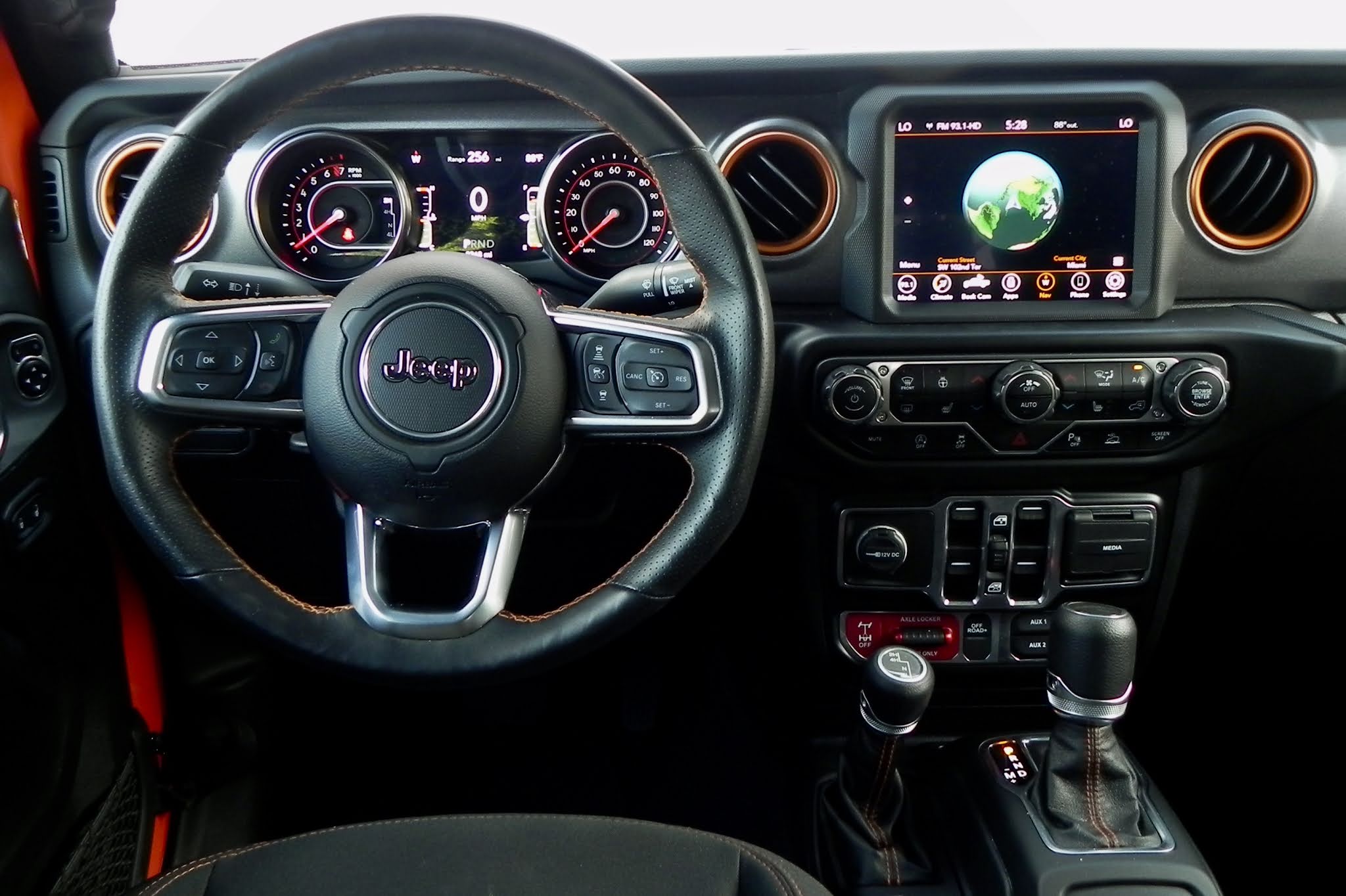
JEEP BACK IN THE TRUCK MARKET WITH AWARD-WINNING GLADIATOR


It didn’t take long for the 2020 Jeep Gladiator pickup truck to make an impression.

First shown at the Los Angeles Auto Show in late fall of 2018 and launched the following spring of 2019 as Jeep’s first truck since 1992, the Gladiator earned 2020 North American Truck of the Year honors at the North American International Auto Show in Detroit.


But that’s not what my neighbor called it when it showed up in my driveway recently.

To him the truck done up in “punk’n Orange” that showed up in my driveway was the “Great Pumpkin,” which, considering the rapid approach of Halloween, might be considered appropriate.

He did not intend this as a compliment, however. But he never had the opportunity to get behind its wheel either!


The Gladiator is offered in five trim levels starting with the base Sport and continuing with the Sport S, Overland, Mojave, and Rubicon, all featuring a 3.6-liter Pentastar V6 engine and 6-speed manual transmission as standard with an 8-speed automatic available as an option. A 2-speed transfer case is standard in all Gladiators.

Altitude and High Altitude packages are available to add premium amenities to further expand the lineup. 


The engine is rated at 285 horsepower and 260 pound-feet of torque and drinks regular fuel at the rate of 17 miles per gallon city, 22 highway, and 19 combined.

This review is based on the Mojave trim that began arriving in showrooms last spring and earns the company’s first “Desert Rated” badging. It is tailored for high-speed off-roading with special shocks and bumpers and other refinements to handle sandy environments. The “Trail Rated” Rubicon is aimed to handle more traditional off-roading challenges with its own specific 2-speed transfer case.
.
The Gladiator looks like a Wrangler with a pickup truck bed at the rear instead of a smaller, enclosed stowage area, and they do share some common characteristics. They have a removable top and doors for an open air driving/riding experience, and the buttons to raise and lower the windows are under the controls for the A/C and audio in the middle of the center stack.


But there are differences as well, such as in engine choices (the Wrangler is offered with a V6 or turbo-4 gas engine and also diesel; the Gladiator gets only the the V6, though a diesel model will be included in the 2021 fleet), towing capacity (7,650 pounds for the Gladiator, up to 3,500 for the Wrangler), and, obviously, size.

Unlike most pickup trucks that can be had with various size beds for hauling, the Gladiator comes with a standard 60.3-inch box, which gives it a length of 218 inches. The 4-door Wrangler is 188.4 inches long

Though functional and accommodating to the kind of abuse it likely would get from off-roading adventures with removable drain plugs and carpeting to hose out the cabin, the Gladiator’s interior also is a bit more refined that the Wrangler’s Spartan cabin.

That isn’t to say it’s the fanciest pickup on the market today, but the Gladiator’s cabin just has a more upscale ambiance. A dual zone climate control system with dual zone cabin air filter is standard on the three upper trims (Overland, Mojave, Rubicon), LED interior lighting is standard, and premium cloth seats are standard on Mojave and Rubion models with leather optional.

Remote keyless entry is also standard on the upper three trims, and all trims get push-button start. And eight-speaker sound system is standard and an upgrade to a premium system with nine Alpine speakers is optional. Handsfree Bluetooth communications is standard on all tri

The other key difference between the Gladiator and Wrangler is the matter of price. MSRP for the Gladiator starts at $33,545 to $28,295 for the Wrangler, though the top end is very similar ($43,875 for the Gladiator, $42,195 for the Wrangler.

My test Gladiator came with a lot of extras, however, that widened that margin considerably with a final bottom line of $61,505, including $1,495 for the destination charge.

What I liked about the 2020 Jeep Gladiator Mojave:
I rarely get the opportunity for any serious off-road trekking, but I do like to know I have the ability to do it if I want, and you can’t get any more serious than a Jeep. I like that you can remove the top (though with having it for just a week I didn’t) for an open-air driving experience.

What I didn’t like about the Jeep Gladiator Mojave: You have to pay close attention when driving on expressways to keep it in line. The starting MSRP seems reasonable by today’s standards when $40,000 is the new $30,000, but with a final bottom line topping the $60,000 mark, my test Mojave is in luxury territory price-wise. Of course, maybe you can live without 8-speed automatic transmission with Selec-Speed control and transmission skid plate ($2,000) or the infotainment package that includes premium audio and navigation ($1,695) or the premium LED lighting group ($1,045) or the heavy duty rock slider ($1,050). But I would advise you at least go with the active safety group ($995) that includes rear park assist and blind spot warning as well as the features like adaptive cruise control and full-speed forward collision warning ($795).

Would I guy the 2020 Jeep Gladiator Mojave? There’s not a whole lot of opportunity for desert tracking in South Florida, so I would say “no” to the Mojave but would look at other trims. There is really no other truck quite like this one. Even the metallic punk’n orange color, which I find off-putting on many vehicles, works here (despite what my neighbor had to say about it).